DEMOCRATIZATION ENVIRONMENTAL AND MANAGEMENT FOR LARGE AREAS
Por FRANCISCO BRITO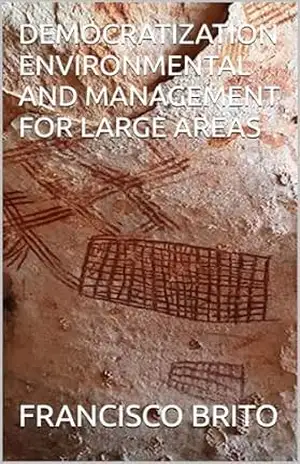
Sobre o livro
Democratization Environmental and Management of Large Areas is a book that brings together important theories on territorial planning to support the decentralization of environmental management by the bodies that implement national environmental The bodies that implement national environmental policy in Brazil are IBAMA – the Brazilian Institute for the Environment and Renewable Natural Resources and ICMBio – the Chico Mendes Institute for Biodiversity Conservation, both linked to the Ministry of the Environment.
IBAMA is responsible for overseeing and imposing administrative sanctions on environmental offenders, in accordance with environmental legislation and the new Forest Code, but also for monitoring, predicting and controlling deforestation, fires and forest fires; and supporting environmental emergency activities in this and that biome.
It also works to preserve the Amazon.
ICMBio carries out the environmental management of federal Conservation Units – full protection, allowing the indirect use of natural resources, scientific research and visitation for the purposes of environmental education, recreation and ecological tourism; and sustainable use Conservation Units, whose objective is to make people’s coexistence compatible with the conservation of natural resources and the sustainable use of natural resources by the owners, through rules and restrictions determined by the managing environmental body.
Two important management tools are zoning and the management plan for protected areas, which establish the parameters for the use and management of natural resources within the PAs.
The Ministry of the Environment (MMA) is the coordinator of the entire environmental management process Despite the efforts of the Ministry of the Environment (MMA), environmental conflicts have been the cause of many actions, involving the Armed Forces, the Federal Police, the Military Police and the Fire Brigade, to resolve conflicts in the Legal Amazon biome, which has been invaded by land grabbers, deforestation and illegal burning to open up space for agriculture and cattle ranching.
Environmental conflicts permeate the exploitation of renewable natural resources (forests, animals, rivers) and the exploitation of non-renewable resources (minerals, rocks, sand) without a management plan for the exploitation of sustainable natural resources, such as illegal deforestation and burning; and the exploitation of non-renewable natural resources, in the exploitation of minerals (gold, diamonds, iron and others).
Exploiters of the Amazon’s natural resources have not respected the protected areas of the Legal Amazon. Illegal miners have invaded the region’s conservation units and indigenous lands.
With a lot of struggle and repression by the armed forces and the federal police, the environmental conflicts have been eased. However, arson continues and the rivers are still contaminated by mercury.
As a way of strengthening the conservation units created by law, the MMA and ICMBio have been striving to create new land-use planning instruments to mitigate the environmental conflicts caused by the scarcity of land for agricultural production, such as Corridors and Mosaics of Conservation Units to achieve shared, participatory, integrated management and the involvement of UC managers and the local population, in order to make socio-environmental and sustainable development compatible.
The book covers the theory of macro-processes for applying the territorial instruments of Ecological Corridors and Mosaics of Protected Areas to ensure and guarantee the maintenance of ecosystems (fauna and flora).
This means that the macro-process tools are applied to structure the plans and targets to be achieved by the social agents involved in planning, organizing and carrying out the activities to be carried out collectively, based on structuring plans and targets so that the work can be interacted with by the various social agents involved.
Baixe esta página em PDF para ler quando quiser, mesmo offline.
📄 Salvar PDFAvaliações dos leitores
Descubra as opiniões de outros leitores, explore avaliações detalhadas e veja se este livro realmente vale a pena para você, com base em experiências reais de quem já leu e compartilhou sua visão sobre a obra.
⭐ Reviews dos leitores